Learn what is proof of concept in software development and how it helps test ideas before full development. Test your concepts early and save time and money.
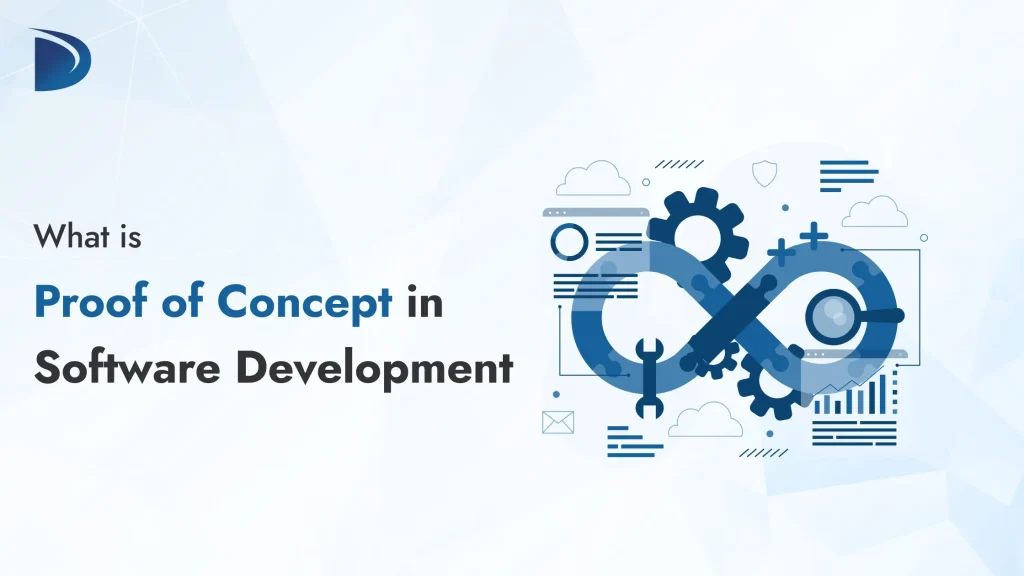
When starting a new software project, it is important to test whether an idea or technology will work before fully committing. A proof of concept (PoC) helps developers confirm an idea on a smaller scale, validating the project’s potential. This blog explains what a proof of concept is in software development and why it is important. It also discusses key steps, common mistakes, and how to measure success when building a PoC.
What is Proof of Concept in Software Development?
A Proof of Concept (PoC) in software development is a small-scale version of an idea or technology, created to test whether it will work before building the full system. It demonstrates that the core concept can be developed and functions as intended, helping assess whether it is worth pursuing further.
By building a proof of concept, developers can determine whether the concept is technically viable and identify potential problems early in the process. Rather than developing the entire product immediately, a proof of concept isolates the key features that need testing, making it easier to confirm if the idea is feasible.
Why Is It Important?
i) Identifies Risks Early: A PoC helps identify technical and business risks before full development begins, reducing the risk of failure.
ii) Tests Feasibility: It checks whether the proposed solution can work as planned, ensuring it is a practical approach to solving the problem.
iii) Saves Time and Money: Developing a proof of concept allows you to test ideas on a smaller scale, saving resources if the idea is not viable. It helps avoid unnecessary work and costs.
iv) Gains Stakeholder Support: A working proof of concept can show stakeholders that the idea has real potential, which may help secure the necessary support or funding for the next steps.
v) Informs Decisions: By confirming or ruling out an idea’s viability, a PoC helps decision-makers decide whether to proceed with full development.
Differences between PoC, Prototype, and MVP:
Aspect
Proof of Concept (PoC)
Prototype
Minimum Viable Product (MVP)
Purpose
To test if an idea or technology is viable.
To demonstrate the design and functionality of an idea.
To release a working version of the product with core features.
Focus
Feasibility and technical validation.
Visual design and interaction flow.
Core functionality to solve the main user problem.
Development Stage
Early, concept stage.
Mid-stage, more refined than PoC.
Final stage before full product release.
Scope
Limited to testing key features or ideas.
Shows how the final product will work, but not fully functional.
Contains essential features only, with basic functionality.
Cost and Time
Low cost and quick development.
Higher cost and more time than PoC, but less than MVP.
Higher cost and time for development, as it’s a working version.
Target Audience
Internal teams, investors, stakeholders.
Internal teams, potential users for feedback.
Early adopters or users who need a working version of the product.
Feedback
Based on technical viability and feasibility.
Focused on user experience and design feedback.
Based on how the product solves user problems, with room for improvement.
Example
Testing a new technology’s ability to integrate with an existing system.
A clickable design of an app with basic user flows.
A basic version of a mobile app with core features for early users.
Steps to Create a Proof of Concept in Software Development
Step 1: Define the Core Idea
Clarify the problem you are addressing and the proposed solution. Focus on the main features that require testing. Highlight the most important aspects to keep it simple.
Step 2: Set Clear Goals
Decide what you want to achieve with the PoC, such as testing functionality or performance. Set clear objectives to track progress. This helps you focus on what needs to be tested.
Step 3: Plan the Resources
Identify the tools, skills, and technologies required for the PoC. Ensure the team has the necessary resources. Avoid unnecessary complexity by focusing only on what is needed.
Step 4: Build the PoC
Create a basic version of the product with only the core features. Keep it simple and functional. The goal is to test, not to develop a fully finished product.
Step 5: Test and Gather Feedback
Test the PoC under real conditions and gather feedback. Identify any issues or areas for improvement. This step demonstrates whether the idea works as planned.
Step 6: Analyze Results and Make Decisions
Review the results and decide whether to continue or make adjustments based on technical, business, and user feedback. This step determines the next actions for development.
Common Mistakes to Avoid in PoC Software Development
Creating a proof of concept (PoC) is an important step in validating ideas before full-scale development. However, many developers make mistakes that can affect the PoC’s effectiveness. Here are some common pitfalls to avoid when building your PoC.
i) Overcomplicating the PoC
It is easy to get carried away by adding extra features, but this can distract from the core idea. Keep your proof of concept simple by focusing on testing only the most important aspects.
ii) Ignoring User Feedback
Skipping feedback from potential users or stakeholders can result in missing critical insights. Always gather feedback to determine whether the idea works for the target audience.
iii) Failing to Set Clear Goals
Without clear objectives, you may end up testing the wrong aspects. Define what you aim to achieve with your PoC, such as demonstrating the concept’s viability or functionality.
iv) Underestimating Time and Resources
Some assume a proof of concept will be quick and easy to build. Failing to plan resources or time properly can lead to rushed work and incomplete results. Be sure to allocate enough time and resources for effective testing.
v) Neglecting Scalability
Focusing only on the initial version can be shortsighted. Always consider how the PoC might scale and what challenges could arise in later stages of development.
vi) Skipping Technical Feasibility Testing
A PoC is designed to test whether your concept can be built and function under real conditions. Skipping technical checks can waste time and effort if the idea later proves unfeasible.
vii) Not Analyzing the Results Properly
Once your PoC is complete, do not skip the analysis phase. Without reviewing feedback and results, you may miss important information about whether the project should proceed.
Types of Proof of Concept in Software Development:
Type of PoC
Description
Technical PoC
Focuses on testing the feasibility of a specific technology or approach to solve a technical problem.
Business PoC
Aims to validate the business model or potential market demand for a product or service.
Feasibility PoC
Tests whether the proposed solution can be implemented in the real world and meets the desired goals.
Integration PoC
Verifies how well different systems or technologies can work together in an existing infrastructure.
Prototype PoC
A working model or mockup designed to test specific features or functions of the product before full-scale development.
FAQs
i) What are the key components of a successful PoC in software development?
A successful PoC includes a clear problem statement, a proposed solution, defined goals, and a small-scale version of the idea. It focuses on testing key features to verify feasibility.
ii) How can collaboration impact the PoC development process?
Effective collaboration aligns goals, timelines, and resources. Clear team communication keeps the project on track and ensures everyone works toward the same objectives.
iii) What should be considered for future steps after completing a PoC?
After testing a proof of concept, it is important to plan for scaling the project, identify distribution platforms, determine market reach, and allocate a budget for continued development.
iv) How can learning from previous PoC projects improve future development?
Learning from past mistakes and successes refines processes and improves approaches for future PoC projects. It enables better resource allocation, clearer goals, and more effective execution.
Conclusion:
What is proof of concept in software development? Simply put, it is a way to test an idea or technology on a small scale to determine if it works before investing time and resources in full development. A PoC helps identify potential issues quickly and supports more informed decisions about whether to proceed.
By keeping it simple and focused on core features, you avoid unnecessary risks and ensure you are on the right track. It is about validating the idea early and saving time, money, and effort in the long term.
Dadhich Rami is an experienced professional with over 9 years in the tech industry, specializing in both Android development and Salesforce solutions. He began his career as an Android developer, focusing on creating user-friendly and efficient mobile applications. Over time, Dadhich expanded his expertise to Salesforce, where he has customized and optimized CRM systems to meet diverse business requirements.


 Krunal Pawar
 Krunal Pawar
 Bhavik Chauhan
 Jignesh Patel